
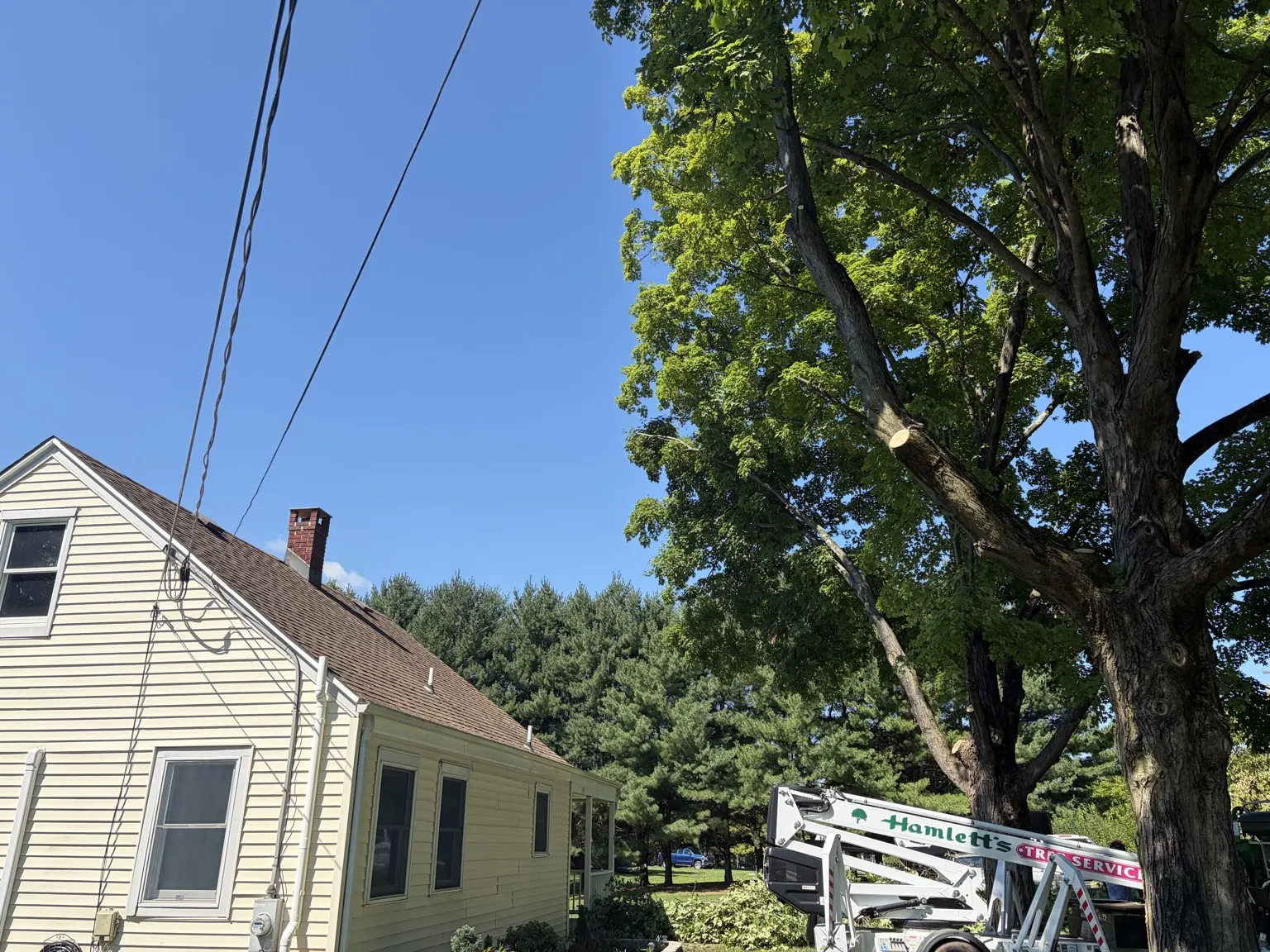
Tree Trimming & Pruning in Belle Mead, NJ
Structural pruning, crown thinning, and corrective work — cuts made to help the tree, not just to make it look cut.
Most tree trimming in central New Jersey is done wrong. Crews show up with a bucket truck, top the tree back to stubs, leave open flush cuts, and call it a day. Six months later the tree responds with weakly-attached watersprouts, decay pockets form at the wound sites, and the homeowner is now on a countdown to a much bigger — and much more expensive — problem. Hamlett's Tree Service prunes to ANSI A300 standards because that's the difference between a healthy tree in 2050 and a hazard tree in 2030.
We do structural pruning on young trees to establish a single dominant leader and a strong branch architecture before problems set in. On mature oaks, maples, and beeches — the trees Somerset and Mercer County are known for — we do crown thinning to reduce wind load and let dappled light reach the lawn beneath. When a tree has been damaged by a storm or butchered by a previous company, we do corrective pruning to gradually restore form and reduce hazard.
Every cut is made at the branch collar. We never top, we never leave stubs, and we never lion's-tail. Deadwood over walkways, driveways, and gathering areas is removed on the same visit. Owner Joe Hamlett — a certified tree service specialist with 30+ years in this county — sets the plan for every tree personally and works alongside the crew so nothing gets shortcut.
Because Hamlett's is fully licensed and insured, and because the same owner has been doing this work in your neighborhood since 1994, we're the crew HOAs, property managers, and long-time homeowners in Belle Mead call when a tree matters to them.
- Structural pruning to ANSI A300 standards
- Crown thinning to reduce wind load
- Corrective pruning after storm or bad prior work
- Deadwood removal over walkways and structures
- Elevation lifting for clearance over roofs and driveways
- No topping, no lion's-tailing, no flush cuts — ever
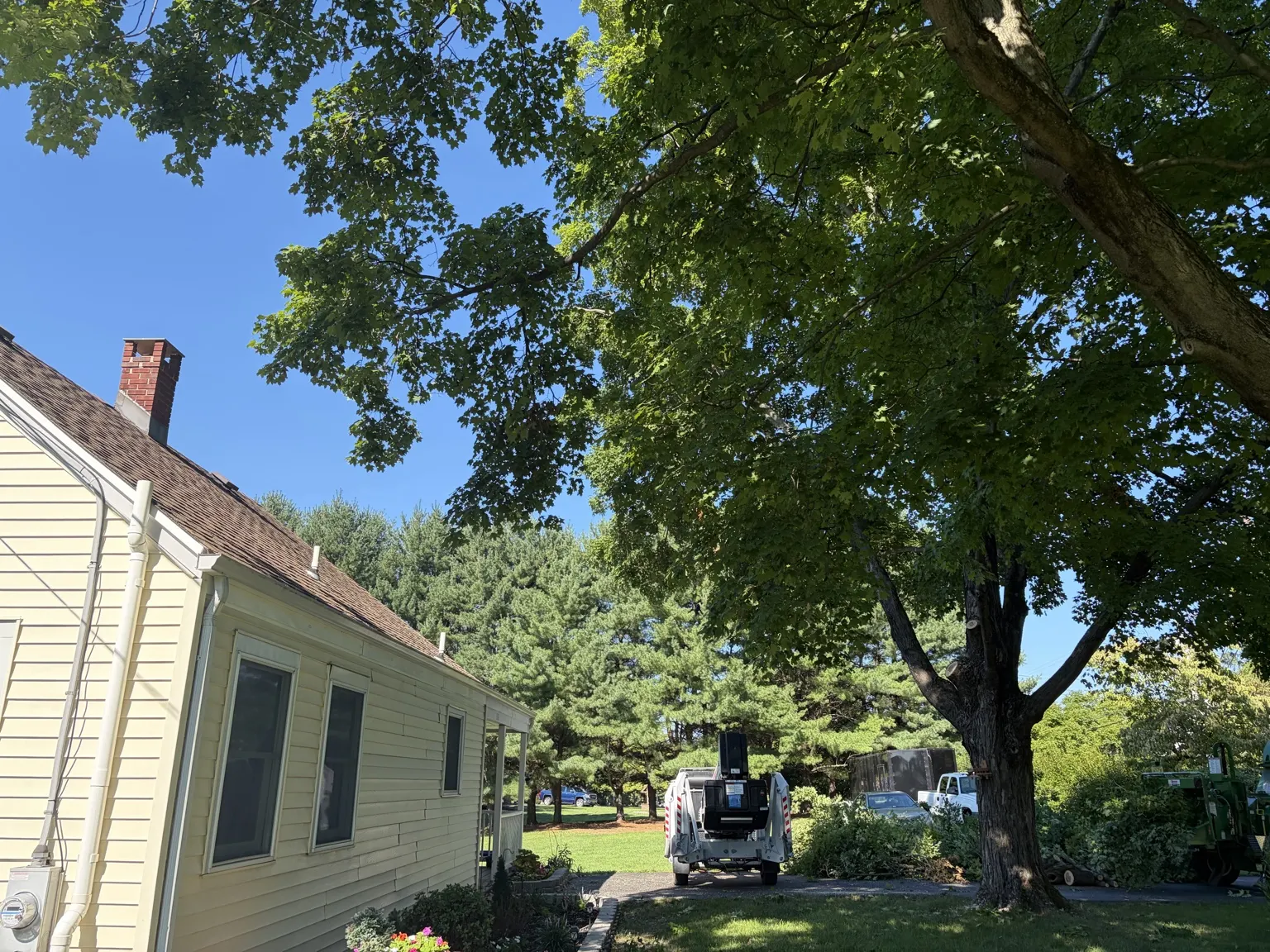
Pruned From The Bucket.
For tall canopies, the bucket lift puts the saw exactly where the cut needs to be — no spikes in the tree, no torn bark, just clean pruning cuts at the right height.
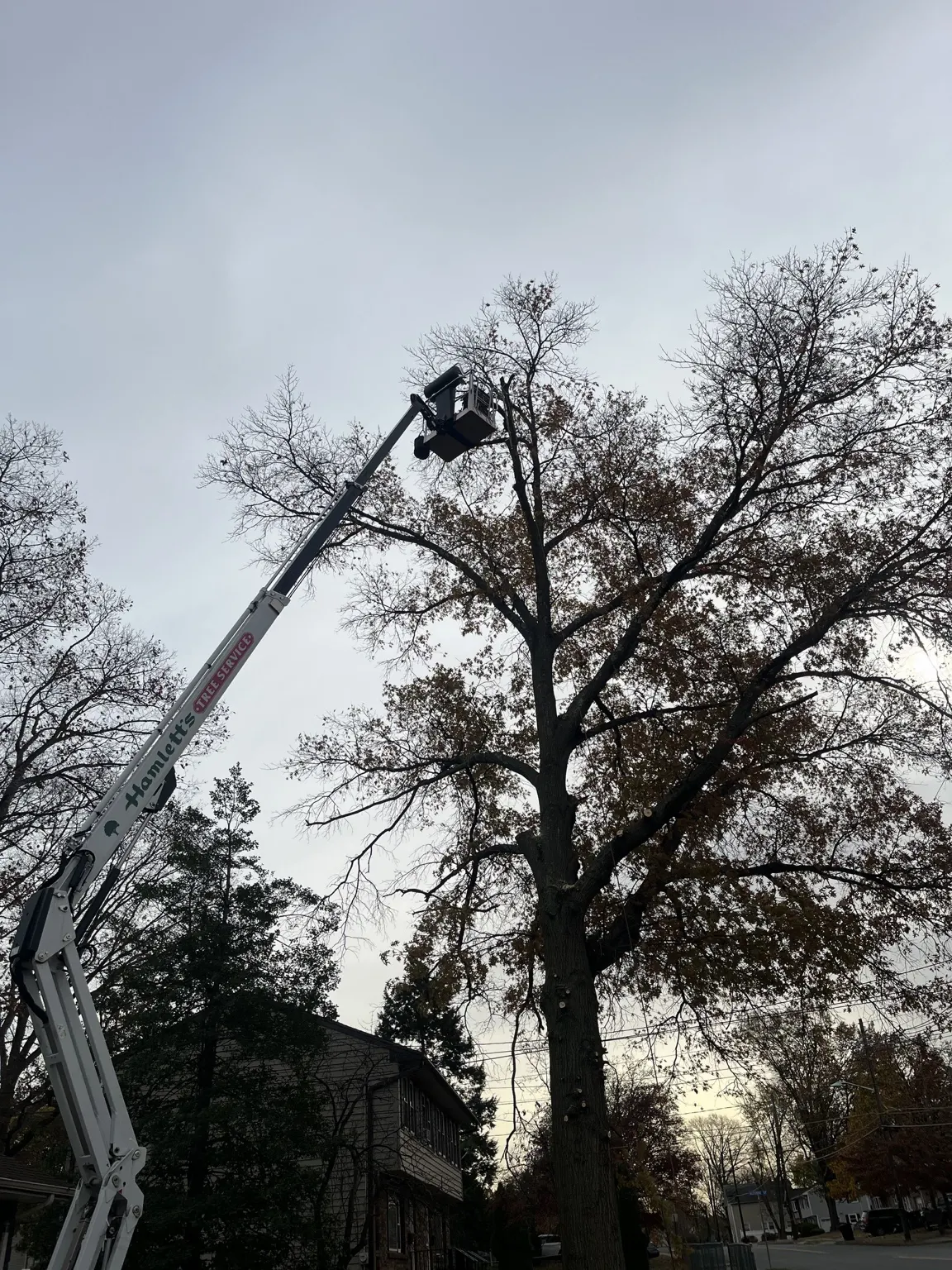
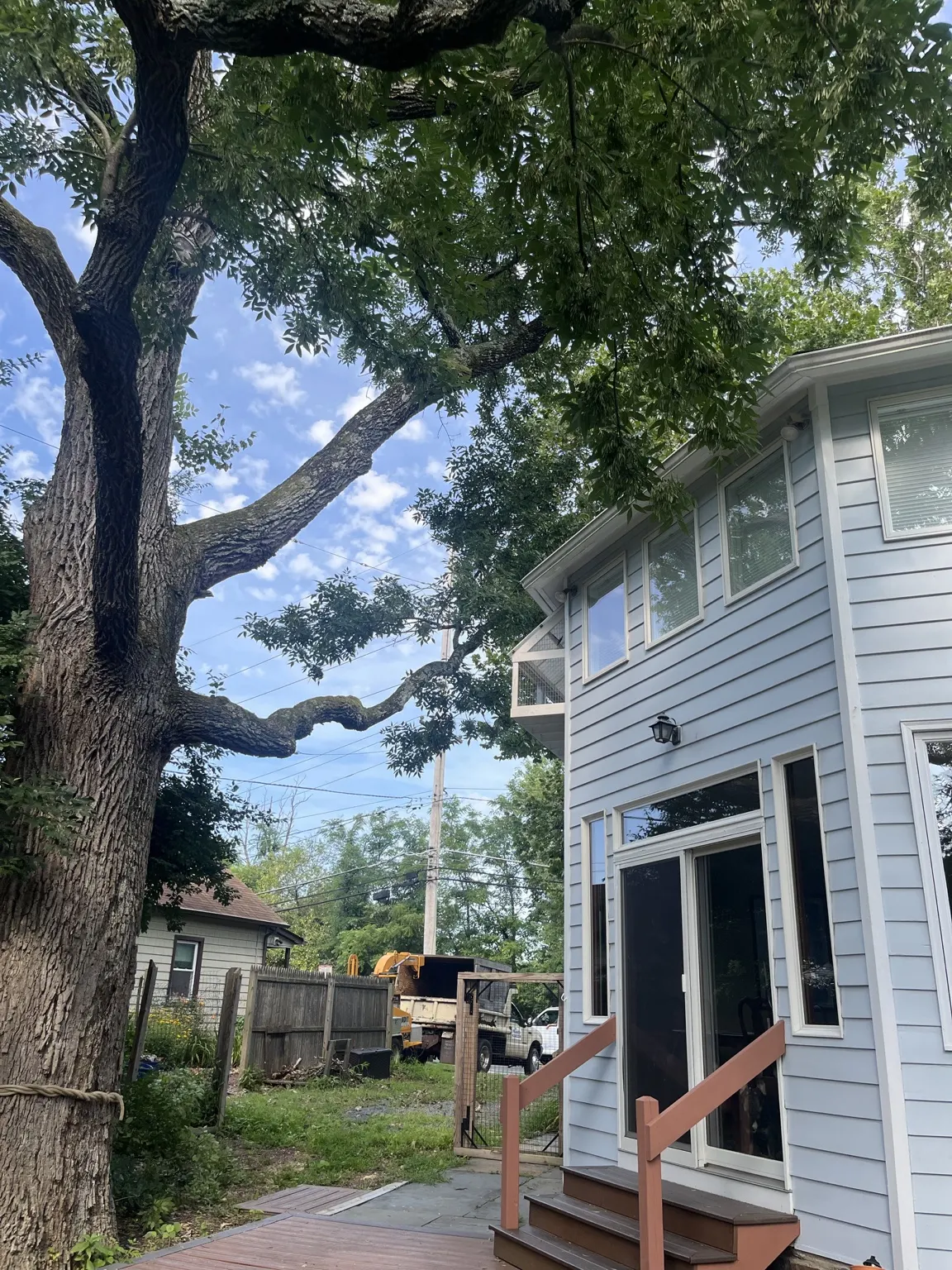
Limbs Over The House.
Heavy limbs reaching over the roofline get cut back and lowered with care — clearing the house while keeping the tree healthy.
Simple. Direct. Done right.
Tree Assessment
Joe walks each tree with you, points out structural issues, deadwood, and health concerns, and outlines exactly what cuts we'll make and why.
Precision Pruning
Climbers work each tree from the top down, making proper collar cuts. Nothing is topped, nothing is stubbed, nothing is guessed at.
Clean & Chip
All brush is chipped, deadwood hauled, and the site raked and blown clean. Your trees look intentional — not butchered.
Questions answered.
How often should mature trees be pruned?+
Most healthy mature oaks and maples need attention every 3–5 years. Younger trees benefit from structural pruning every 2–3 years to set them up for life.
What's the best time of year to prune?+
Dormant season (late fall through early spring) is ideal for most species. Storm damage and safety cuts happen whenever they're needed.
Do you 'top' trees?+
No. Topping is destructive and creates decay and hazard. We reduce a crown properly by cutting back to lateral branches at the collar.
Can pruning save a struggling tree?+
Often, yes — corrective pruning removes damaged, diseased, or crossing wood and lets the tree redirect energy to healthy structure. Joe will tell you honestly if a tree is past that point.
Will you clean up all the brush?+
Every time. Chips hauled, driveway blown, lawn raked. We don't leave piles for the homeowner.